
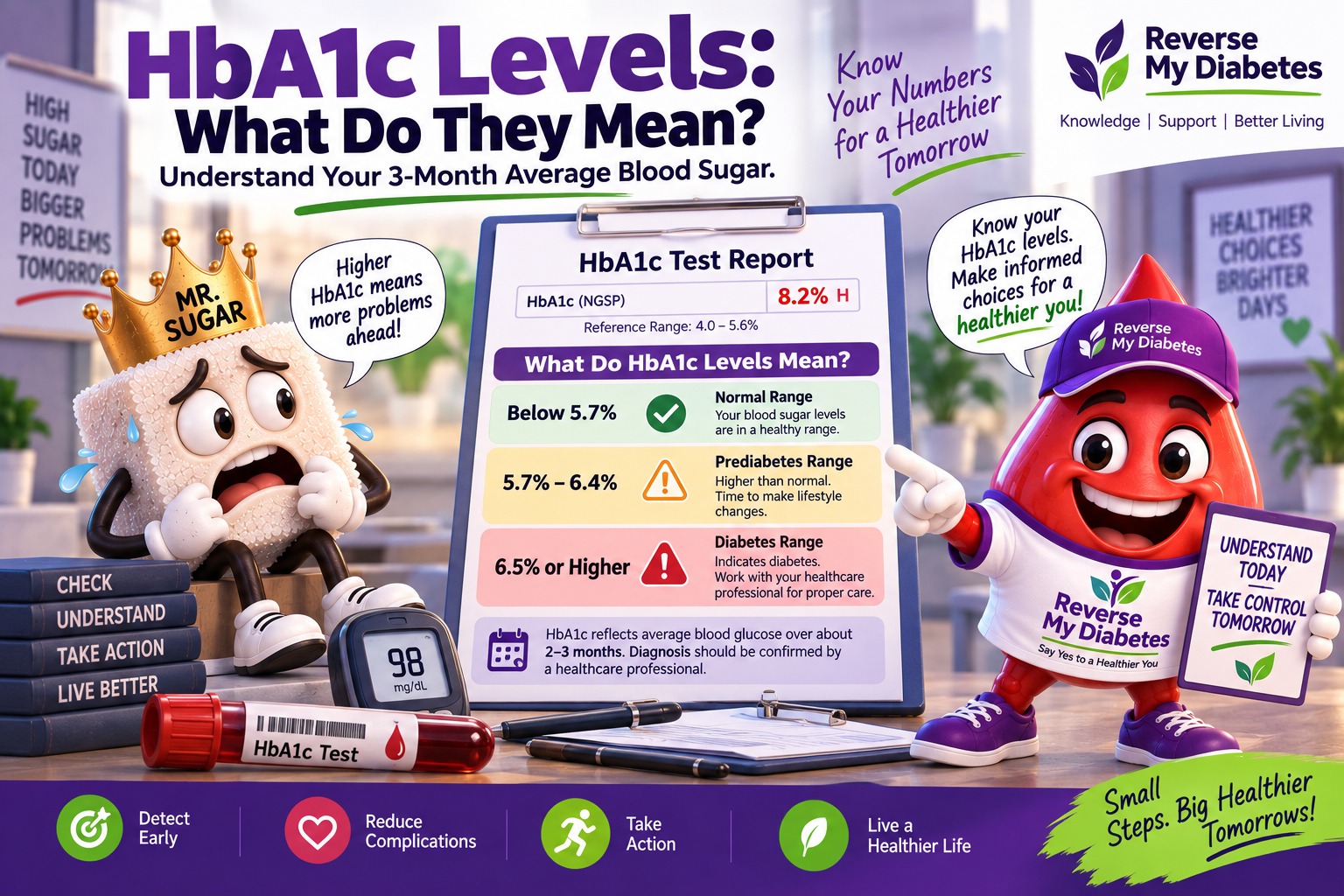
There’s a specific kind of confusion that comes with staring at a lab report full of numbers and abbreviations, nodding along in the doctor’s office, and then googling it later because you didn’t quite follow. HbA1c is one of the most common culprits. It’s mentioned constantly in diabetes care, but rarely explained in plain language.
Here’s the plain-language version — what HbA1c actually measures, what the numbers mean, and what genuinely moves that number over time.
What Is HbA1c?
HbA1c stands for glycated hemoglobin — a mouthful, but the concept behind it is fairly simple. Hemoglobin is the protein in red blood cells that carries oxygen throughout your body. When blood sugar is elevated, some of that sugar attaches to hemoglobin, and it stays attached for the life of the red blood cell, which is roughly two to three months.
The HbA1c test measures what percentage of your hemoglobin has sugar attached to it. Because red blood cells live for a few months, this number effectively gives a snapshot of your average blood sugar over the past two to three months — not just a single moment in time.
Why It’s Different from a Daily Blood Sugar Reading
A fingerstick or glucose meter reading tells you your blood sugar right now — useful, but limited. It can be thrown off by what you just ate, whether you exercised recently, or even stress that morning.
HbA1c smooths all of that out. It doesn’t care what you ate for breakfast today; it reflects a longer pattern. This is exactly why doctors rely on it as one of the primary tools for diagnosing diabetes and tracking how well it’s being managed over time, rather than relying solely on day-to-day readings.
What the Numbers Actually Mean
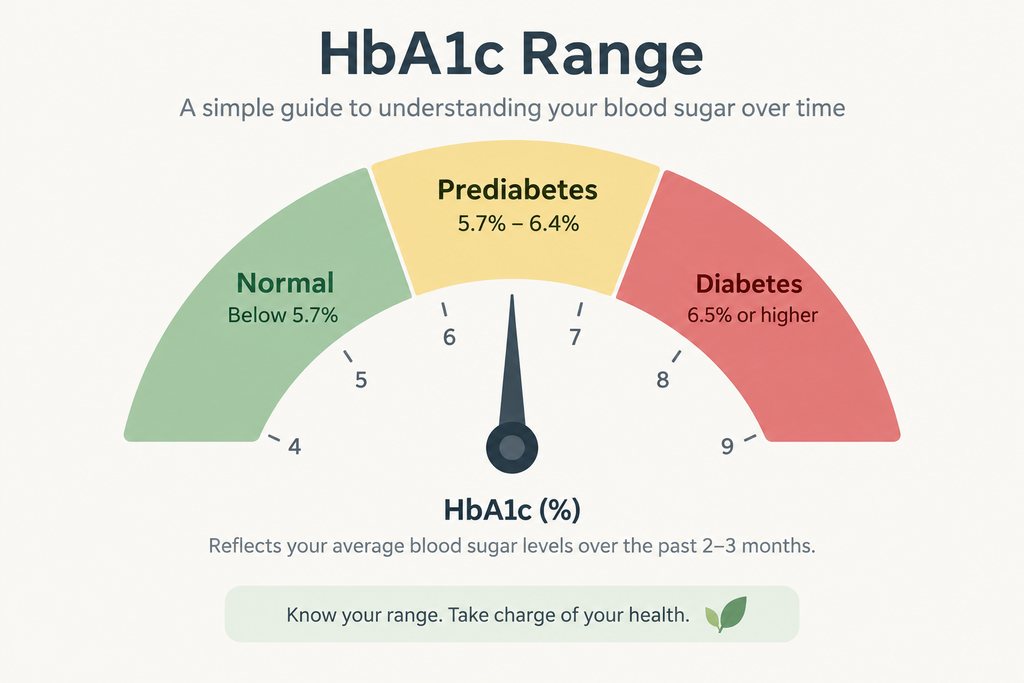
HbA1c results are expressed as a percentage. General reference ranges look like this:
| HbA1c Result | What It Generally Indicates |
| Below 5.7% | Below 5.7% Normal range |
| 5.7% – 6.4% | Prediabetes range |
| 6.5% or higher | Diabetes range |
How Often Should You Get Tested?
For people already diagnosed with diabetes, HbA1c is typically checked every three to six months, depending on how stable blood sugar control has been. If you’re newly diagnosed, adjusting medication, or your levels haven’t been well controlled, your doctor may recommend more frequent testing.
For people without a diabetes diagnosis but with risk factors — family history, being overweight, or other markers — HbA1c may be used as a screening tool during routine checkups, even without symptoms.
What Actually Lowers HbA1c
Because HbA1c reflects a two-to-three month average, it responds to sustained changes rather than short bursts of effort. The habits that move it are largely the same ones that support overall blood sugar management:
Consistent, balanced meals — prioritizing fiber, whole grains, and lean protein over refined carbs and added sugar
Regular physical activity — even moderate movement like daily walking has a measurable effect over months
Medication adherence, if prescribed, taken as directed rather than adjusted informally
Adequate sleep — poor sleep is linked to higher blood sugar and insulin resistance
Stress management — chronically elevated stress hormones can raise blood sugar over time
Because the test reflects months of data, don’t expect a single good week to move the number dramatically. Progress here is measured in patterns, not days.
Conclusion
HbA1c can feel like just another number on a lab report, but it’s actually one of the more useful ones — a longer, steadier picture of how your body has been handling blood sugar over months, not just a single day. Understanding what it measures makes it far easier to see how daily choices, sustained over time, actually move that number in a meaningful direction.
If you’re working on the diet and lifestyle habits that influence this number, you can find practical guidance here: Reverse My Diabetes.