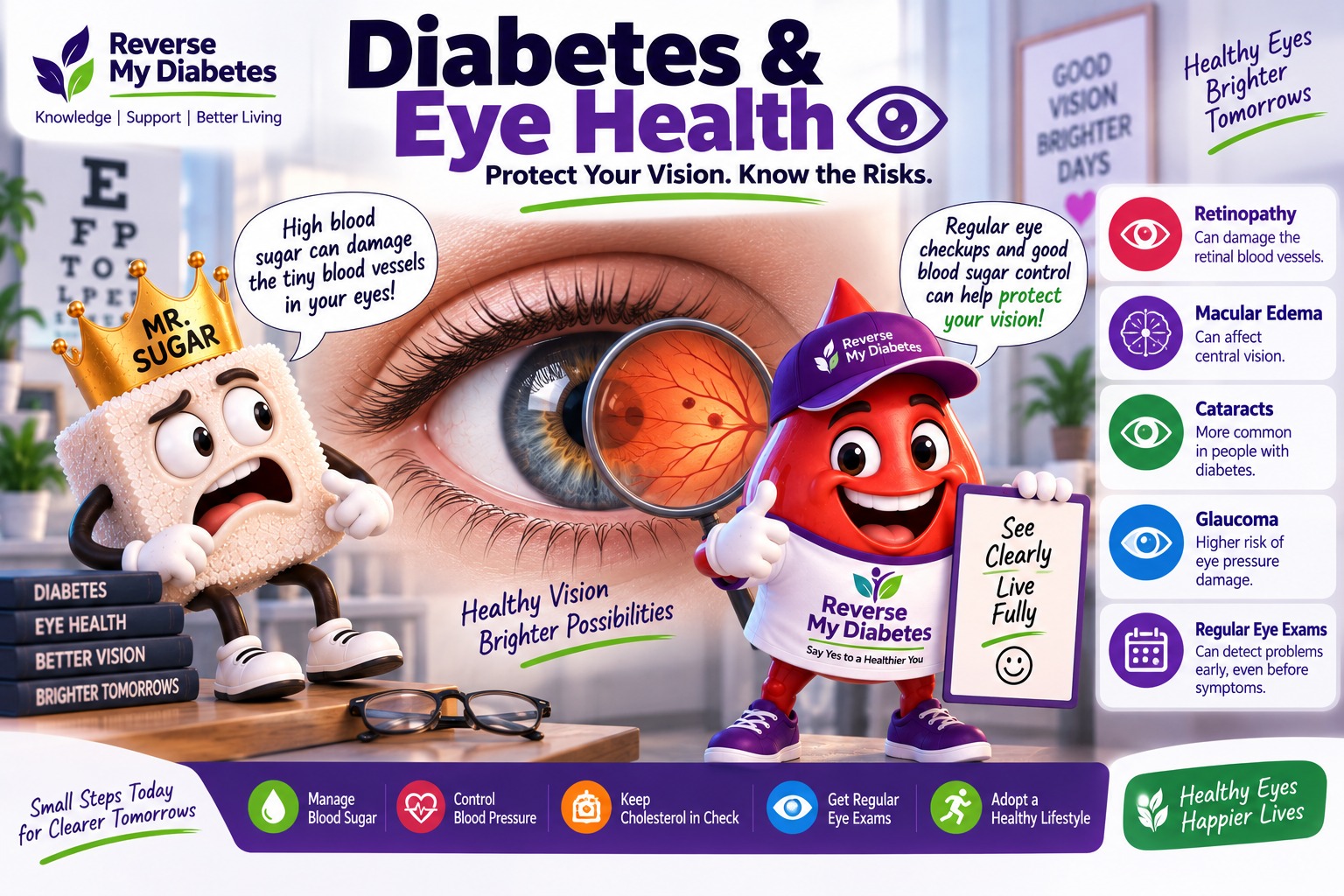

Of all the ways diabetes can affect the body, eye health is one of the easiest to overlook — mostly because it doesn’t announce itself. There’s no ache, no obvious symptom in the early stages, just a slow, quiet process happening behind the scenes. That’s exactly why it’s worth understanding now, before it becomes something you can’t ignore.
This isn’t about scaring you into your next eye exam. It’s about explaining, honestly and simply, what diabetes actually does to your eyes and what genuinely helps protect them.
The Diabetes-Eye Connection
The eyes rely on some of the smallest, most delicate blood vessels in the entire body. That makes them particularly sensitive to the kind of long-term blood vessel damage that high blood sugar can cause — the same underlying process that also affects the kidneys, nerves, and heart.
Diabetic eye disease is actually a group of related conditions, not just one single problem. The most common and most serious of these is diabetic retinopathy, but it’s not the only one worth knowing about.
Diabetic Retinopathy Explained
Diabetic retinopathy occurs when high blood sugar damages the blood vessels in the retina — the light-sensitive layer at the back of the eye responsible for converting what you see into signals your brain can interpret.
In the early stages, these vessels can weaken and leak small amounts of fluid or blood. Most people notice nothing at all at this point. Over time, if left unmanaged, the condition can progress to more advanced stages, where abnormal new blood vessels grow in an attempt to compensate — but these new vessels are fragile and prone to bleeding, which can lead to more serious vision problems, including blindness in severe, longstanding cases.
The part worth sitting with: retinopathy is a leading cause of vision loss in adults, and it’s also one of the most preventable when caught early. The gap between those two facts is exactly why regular screening matters so much.
Other Eye Conditions Linked to Diabetes
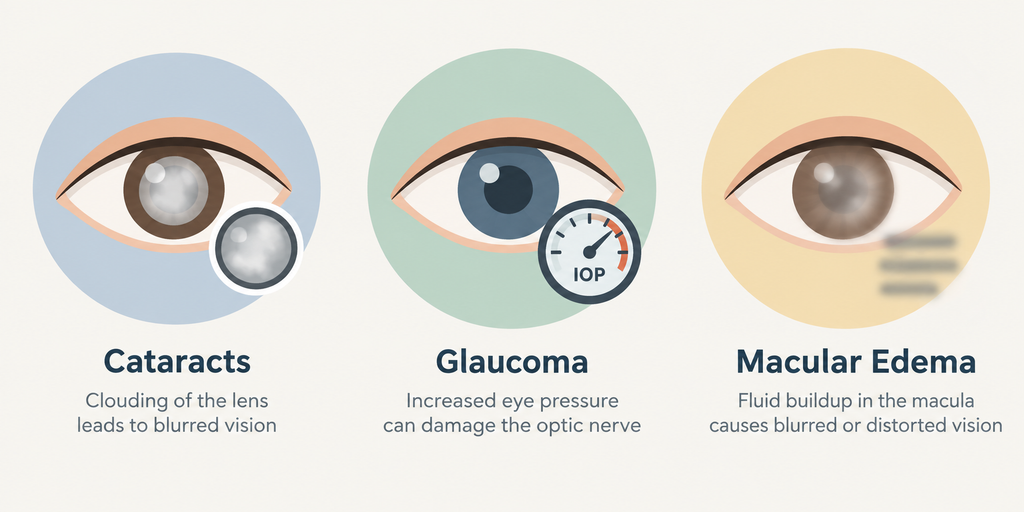
Retinopathy gets the most attention, but it isn’t the only eye condition connected to diabetes:
- Diabetic macular edema — swelling in the macula (the central part of the retina), often a complication of retinopathy, which can affect sharp, central vision needed for reading and recognizing faces.
- Cataracts — people with diabetes tend to develop cataracts earlier and more frequently than people without diabetes.
- Glaucoma — diabetes roughly doubles the risk of glaucoma, a condition involving increased pressure in the eye that can damage the optic nerve over time.
None of these develop overnight, and none of them are inevitable. But all of them share the same underlying risk factor: blood sugar that’s run high for an extended period.
How to Protect Your Vision
The most protective habits here overlap heavily with general diabetes management, which means the effort isn’t wasted or separate from everything else:
- Get a comprehensive dilated eye exam at least once a year. This is the single most effective way to catch changes before they affect your vision, since it can detect retinopathy long before symptoms appear.
- Keep blood sugar within your target range as consistently as possible. Long-term blood sugar control is directly linked to reduced risk of retinopathy progression.
- Manage blood pressure and cholesterol. Both contribute to the same blood vessel damage that affects the retina.
- Don’t skip exams just because your vision feels fine. Early retinopathy is symptomless by nature — feeling fine isn’t the same as being fine.
- Report any sudden vision changes immediately rather than waiting to see if they resolve on their own.
Conclusion
Eye health isn’t a side note in diabetes management — it’s directly connected to the same blood sugar patterns you’re already working to manage. The reassuring part is that consistent, everyday habits protect your eyes the same way they protect the rest of your body, and a yearly exam is a small, manageable step that can catch problems long before they become irreversible.
If you’re working on the diet and lifestyle side of blood sugar management, you can find practical guidance here: Reverse My Diabetes.