

There’s a particular trap that comes with managing diabetes day to day: when blood sugar feels stable and nothing hurts, it’s easy to assume everything is fine. Skipping an appointment feels harmless in the moment. But diabetes has a well-documented habit of affecting the body quietly, sometimes for years, before any symptom shows up at all.
This is exactly why regular checkups matter so much — not because something is necessarily wrong, but because they’re often the only way to catch changes early enough to actually do something about them.
Why “Feeling Fine” Isn’t Enough
Many of the most serious diabetes complications — kidney damage, retinopathy, nerve damage, cardiovascular changes — develop gradually and often produce no noticeable symptoms until they’re fairly advanced. By the time something feels obviously wrong, meaningful damage may have already occurred.
Regular checkups exist precisely to close this gap. Blood tests, eye exams, and other screenings can detect changes at a stage where they’re still manageable or even reversible, well before they’d ever show up as something you’d feel day to day.
What a Full Diabetes Checkup Schedule Actually Includes
A comprehensive diabetes care plan typically involves more than just the appointments people usually think of. Here’s the fuller picture:
- HbA1c blood test — reflects average blood sugar over the past two to three months.
- Blood pressure check — high blood pressure often has no symptoms but compounds cardiovascular risk.
- Cholesterol panel — tracks LDL, HDL, and triglycerides, all relevant to heart health.
- Dilated eye exam — checks for diabetic retinopathy and other eye changes.
- Kidney function tests — usually a urine test and blood test to check for early kidney damage.
- Comprehensive foot exam — checks circulation and nerve sensation, since foot complications often go unnoticed otherwise.
- Dental checkup — diabetes increases risk of gum disease, and gum disease can, in turn, make blood sugar harder to control.
It’s easy to see diabetes as primarily a blood sugar condition and forget that it touches nearly every system connected to blood vessels and nerves — which is most of the body.
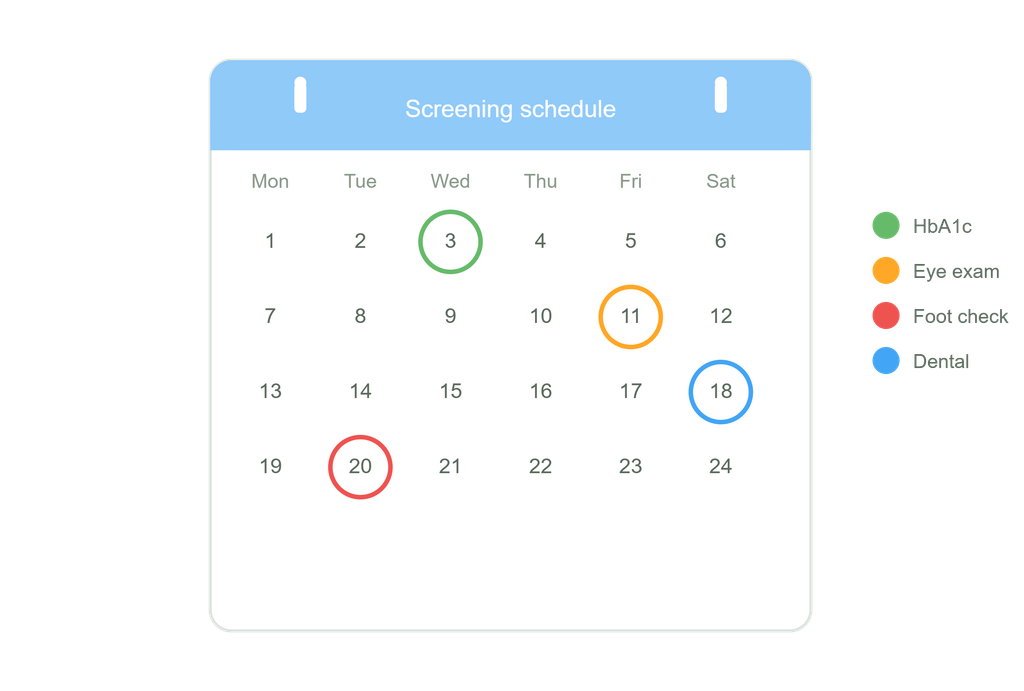
What Each Screening Is Actually Looking For
HbA1c shows whether blood sugar management has been working over the past few months, not just on the day of the test — useful because daily glucose readings can be misleading in isolation.
Blood pressure and cholesterol checks catch two of the biggest contributors to cardiovascular risk, both of which frequently occur alongside diabetes without obvious symptoms.
Eye exams can detect diabetic retinopathy at a stage where it’s asymptomatic but treatable, since early intervention significantly reduces the risk of vision loss.
Kidney function tests catch early signs of diabetic nephropathy, often before any symptoms like swelling or fatigue would appear.
Foot exams check for reduced sensation or circulation problems that could turn a minor cut into a serious infection if left unnoticed.
How Often Should Each Checkup Happen?
General guidelines (always confirm the right schedule with your own doctor, since individual risk factors vary):
| Screening | Typical Frequency |
HbA1c | Every 3–6 months |
| Blood pressure | Every visit, or at least a few times a year |
| Cholesterol panel | Annually |
| Dilated eye exam | Annually |
| Kidney function tests | Annually |
| Foot exam | At every visit, plus daily self-checks |
| Dental checkup | Every 6 months |
Some of these — like foot checks — are quick enough to build into a daily routine at home, while others genuinely require a clinical visit.
What Happens When Checkups Get Skipped
Missing a single appointment isn’t usually catastrophic on its own. The real risk comes from a pattern of skipped screenings over years, which is exactly how complications tend to progress unnoticed — not through one bad month, but through a gradual accumulation of unmonitored changes.
By the time symptoms do appear — blurred vision, foot numbness, swelling, fatigue — the underlying damage has often been developing for a while already. Regular checkups shift the timeline in your favor, catching problems while there’s still meaningful room to act.
Conclusion
Diabetes management often gets framed around daily choices — what to eat, when to walk, how to time medication. All of that matters, but it’s only part of the picture. Regular checkups are what catch the changes that daily habits alone can’t reveal, often long before they’d ever become noticeable on their own. Keeping up with them isn’t extra caution — it’s one of the most effective tools available for staying ahead of complications rather than reacting to them later.
If you’re working on the daily diet and lifestyle side of diabetes management, you can find practical guidance here: Reverse My Diabetes.