
Most people think of diabetes as a blood sugar condition, full stop. So when a doctor starts talking about cholesterol, blood pressure, or heart risk during a diabetes appointment, it can feel like the conversation has wandered off track. It hasn’t. Diabetes and heart health are tied together far more closely than most people realize, and understanding that connection is one of the most useful things you can do for your long-term health.
This isn’t meant to add another thing to worry about. It’s meant to explain why your heart matters just as much as your glucose meter, and what you can actually do about it.
Why Diabetes and Heart Disease Are So Closely Linked
People with diabetes are roughly twice as likely to develop heart disease compared to people without it, and heart disease remains one of the leading causes of death among people with diabetes. That’s not a coincidence — it comes down to shared underlying mechanisms.
High blood sugar doesn’t stay contained to what shows up on a glucose meter. Over time, it affects the blood vessels themselves, the same vessels responsible for delivering blood to your heart, brain, and the rest of your body. When those vessels are damaged, the heart has to work harder, and the risk of complications like heart attack and stroke rises accordingly.
How High Blood Sugar Affects Blood Vessels
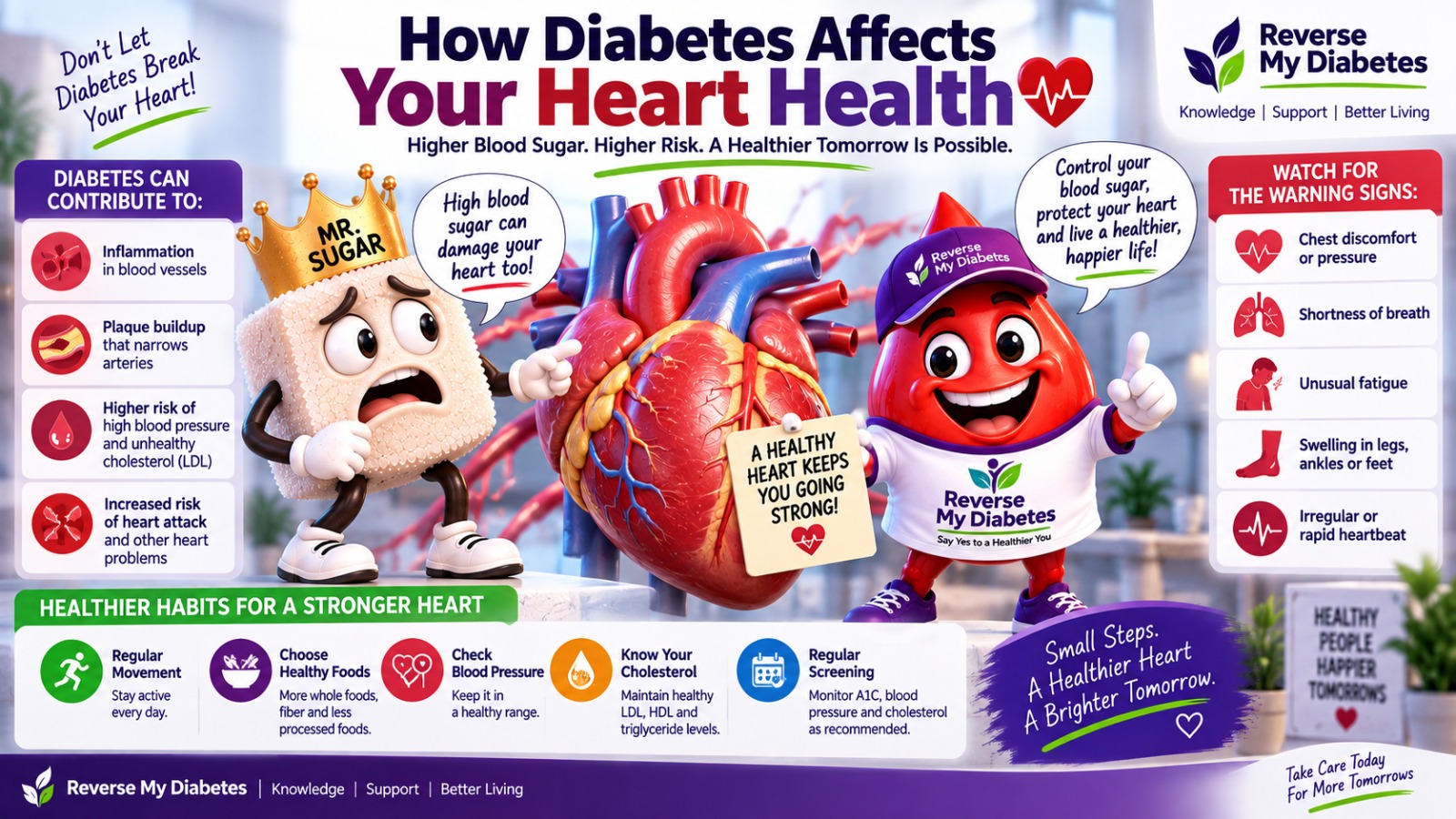
Consistently high blood sugar contributes to inflammation and damage in the lining of blood vessels. Over years, this can lead to the buildup of fatty deposits (plaque) inside artery walls — a process called atherosclerosis. As arteries narrow and stiffen, blood flow to the heart becomes restricted, increasing the risk of heart attack.
This process is usually silent for a long time. There’s often no pain, no obvious symptom — just a gradual buildup that doesn’t announce itself until something more serious happens. This is part of why routine checkups matter even when you feel completely fine.
The Role of Blood Pressure and Cholesterol
Diabetes rarely travels alone. It’s commonly accompanied by high blood pressure and unhealthy cholesterol levels, and together, these three factors compound each other’s effects on the heart. High blood pressure adds extra strain to already-stressed blood vessels, while elevated LDL (“bad”) cholesterol contributes further to arterial plaque buildup.
This combination is sometimes referred to as part of “metabolic syndrome” — a cluster of related risk factors that tend to show up together and amplify each other. The encouraging part is that many of the same lifestyle changes that help manage blood sugar also help improve blood pressure and cholesterol at the same time.
Warning Signs Worth Paying Attention To
- Shortness of breath during everyday activity
- Chest discomfort, tightness, or pressure
- Unusual fatigue that doesn’t match your activity level
- Swelling in the legs, ankles, or feet
- Irregular or rapid heartbeat
What Actually Helps
The reassuring part of all this is that the same habits that help manage blood sugar tend to protect the heart too. There’s real overlap here, not two separate to-do lists.
- Move regularly. Even moderate activity like walking most days has been shown to improve both blood sugar and cardiovascular health.
- Prioritize fiber and whole foods. Diets rich in vegetables, whole grains, and lean protein support healthy cholesterol and blood sugar levels simultaneously.
- Don’t skip blood pressure checks. Blood pressure often has no symptoms until it’s a problem — regular monitoring catches issues early.
- Reduce sodium and processed foods gradually. Small, sustainable swaps tend to stick better than dramatic overnight changes.
- Keep up with routine screenings. Cholesterol panels, A1C tests, and blood pressure checks give your doctor an early warning system you can’t get from symptoms alone.
Conclusion
Diabetes and heart health aren’t two separate conversations — they’re deeply connected, and understanding that connection is genuinely useful rather than just another thing to worry about. The habits that help manage blood sugar are largely the same habits that protect your heart, which means the effort you’re already putting in is doing more work than you might realize.
If you’re looking for practical guidance on the diet and lifestyle side of this, you can find it here: Reverse My Diabetes.